
Managed IT Knowledge Hub · Article 5 of 5 · 8 min read
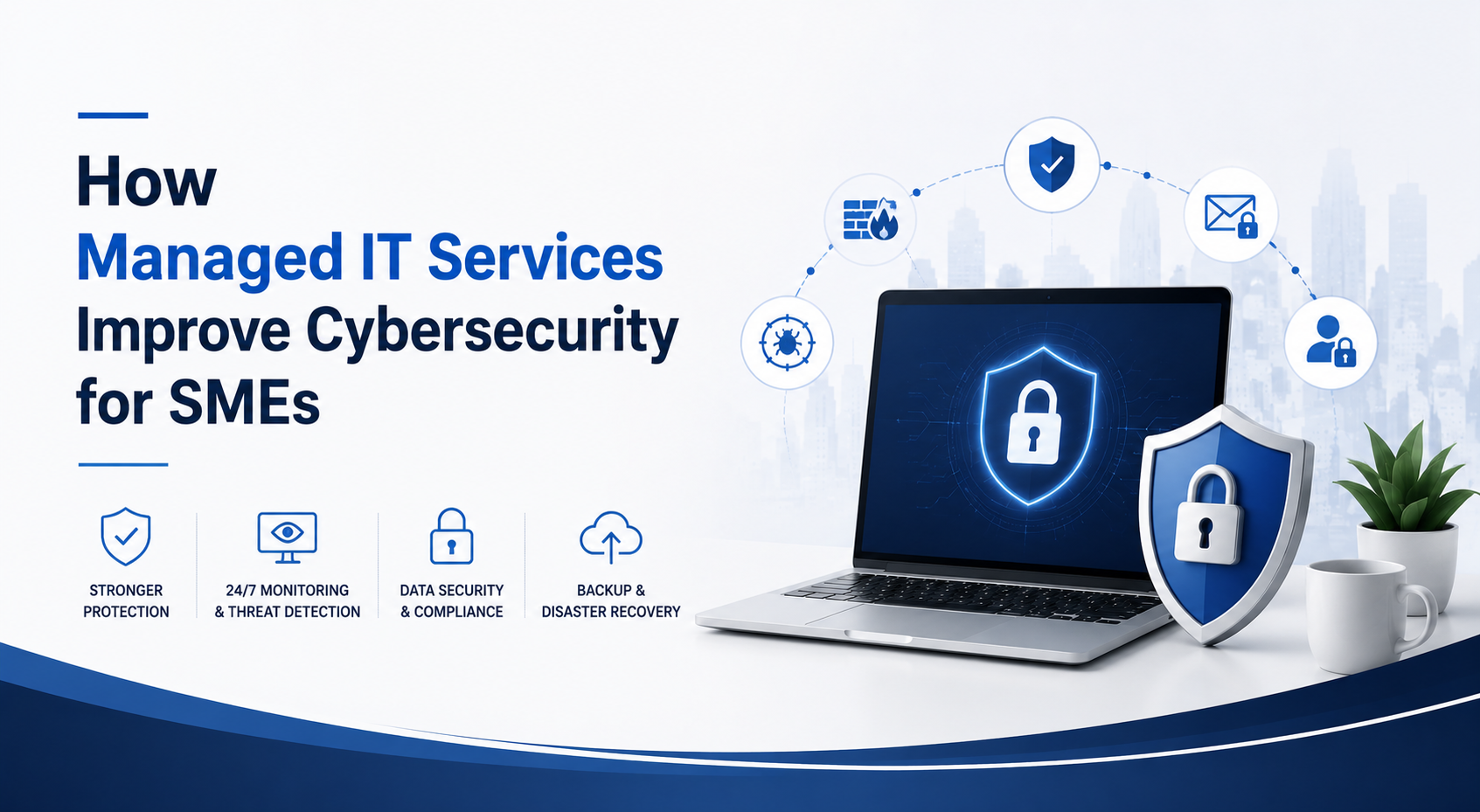
How Managed IT Services Improve Cybersecurity for SMEs
Cybersecurity is no longer only a concern for large enterprises. Today, most SMEs rely on email, cloud applications and digital systems to run their operations, which means they also face the same security risks. The challenge is not knowing that threats exist. It is having the time, expertise and processes to manage them properly.
The short answer: Managed IT services improve SME cybersecurity by providing continuous protection, monitoring and maintenance instead of relying on occasional security checks. An MSP helps businesses manage essential controls such as endpoint security, patching, backups and access protection without needing to build a full internal security team.
The challenge for most SMEs is not a lack of concern about cybersecurity. It is having the resources to manage it properly. Most businesses do not have a dedicated security specialist, someone monitoring threats continuously or the time to maintain every security tool and process. Managed IT services provide the expertise and ongoing management needed to build stronger security without creating a full internal team.
Strong Security Comes From Multiple Layers of Protection
There is no single tool that can fully protect a business. Effective cybersecurity comes from multiple layers working together, where each control helps reduce the risks that others may not catch. This is what a practical, managed security approach looks like for SMEs.
Why Cybersecurity Is Now a Business Priority
Businesses often become vulnerable not because they are deliberately targeted, but because common security gaps are easier to exploit. Weak passwords, outdated software, unmanaged devices, unverified backups and limited security awareness can all increase the risk of a successful attack. When an incident occurs, the impact can range from operational downtime and financial loss to data exposure and reputational damage.
None of these issues are solved by installing another security tool. They require consistent management and regular attention. That is where managed IT services make the difference. Keeping systems updated reduces known vulnerabilities, continuous monitoring helps detect suspicious activity early, access controls limit unauthorised access, and verified backups make recovery possible when incidents occur. Effective cybersecurity is built into everyday IT operations, not treated as a separate task.
5 Ways Managed IT Services Strengthen Cybersecurity
Proactive monitoring catches threats early
Unlike break-fix IT support, proactive monitoring runs continuously in the background. Devices, servers and networks are monitored for unusual activity, allowing potential security issues to be investigated early. The sooner a problem is detected, the easier it is to contain before it disrupts business operations.
Endpoint protection secures every device
Every laptop, desktop and mobile device connected to your business creates another point that needs protecting. Managed endpoint security helps keep devices secure with antivirus, endpoint detection and response (EDR), ransomware protection, security policies and regular updates, reducing the risk of vulnerabilities being left unmanaged.
Verified backups support business recovery
Backups are only valuable if they can be restored when needed. A managed backup strategy includes regular backups, protection against tampering, and routine verification to confirm that business data can be recovered. This helps businesses recover faster from ransomware, accidental deletion and other unexpected incidents.
Access management reduces unnecessary security risks
Controlling who can access your systems is one of the most effective ways to improve cybersecurity. Managed IT services help businesses implement multi-factor authentication (MFA), identity management, user access controls and least-privilege access, reducing the risk of unauthorised access if credentials are compromised.
Every user, device and connection must be verified before access is granted.
Regular maintenance reduces security risks
Many cyber incidents take advantage of known vulnerabilities that could have been addressed through routine updates. Managed IT services keep operating systems, applications, firmware and security configurations up to date, helping reduce unnecessary security risks before they can be exploited.
Is Antivirus Enough to Protect Your Business?
Many businesses believe that installing antivirus is enough to stay protected. In reality, cybersecurity requires ongoing management. Security tools need regular updates, monitoring and maintenance to remain effective as new threats emerge. That is the difference between having security software and having a managed security approach.
| Traditional Approach | Managed IT Security Approach |
|---|---|
| Security tools installed once | Continuous monitoring and tuning |
| Reactive response after incidents | Proactive prevention |
| No visibility between incidents | Regular reporting |
| Manual, sporadic updates | Managed patching |
| IT and security run separately | Integrated protection |
The gaps are rarely caused by missing technology. They happen when security tasks are not consistently managed. An alert goes unreviewed, a backup is never tested, or a security update is delayed. Managed IT services bring these tasks together under a structured process, so they are monitored, maintained and followed through.
How ServicePAQ Integrates Security Into Everyday IT Management
Security is not treated as a separate project or an occasional review. It is built into the day-to-day management of your IT environment. This is how ServicePAQ is designed with security controls integrated across each layer of the service.
Endpoint Security Management
Every managed device is continuously monitored and protected with layered security controls, helping reduce cyber risks while keeping systems secure and reliable.
Backup & Recovery Protection
Business continuity starts with reliable backups. ServicePAQ protects both endpoints and Microsoft 365 data with managed backups that are monitored and regularly verified to support successful recovery.
Email, Identity & Awareness
Help protect your business from phishing, compromised accounts and email-based attacks with managed email security, identity and access management, dark web credential monitoring, and security awareness training with phishing simulations.
Network & Firewall Management
Keep your network secure and reliable with managed FortiGate firewalls, network monitoring and secure Wi-Fi management. ServicePAQ also includes configuration backups and an annual firewall security review.
Every business has different IT priorities. Our How ServicePAQ Works guide explains how the service layers work together, and our guide on the signs your business needs managed IT helps you determine which areas should be addressed first.
Frequently Asked Questions
Can managed IT services protect my business from ransomware?
Yes, managed IT services can significantly reduce ransomware risk, but no solution can guarantee complete protection. A managed IT approach combines endpoint protection, ransomware detection, security updates, access controls and verified backups to help prevent attacks, identify suspicious activity earlier and support faster recovery if an incident occurs.
Do businesses really need cybersecurity services?
The essential cybersecurity measures for an SME include endpoint protection (EDR), multi-factor authentication (MFA), secure and verified backups, regular patching, access management and continuous security monitoring. Staff security awareness training is also important because many cyber incidents begin with human error, such as phishing or compromised credentials.
Is antivirus enough to protect a business?
No. Antivirus is an important security layer, but it is not enough on its own to protect a business. Modern cybersecurity requires multiple controls working together, including access management, security monitoring, verified backups, regular patching and staff awareness training to help reduce risks from threats such as phishing, ransomware and credential theft.
How does an MSP improve cybersecurity?
An MSP improves cybersecurity by making security an ongoing part of IT management. This includes continuous monitoring, regular patching, access management, security alert reviews, backup verification and response when unusual activity is detected. Instead of treating security as a one-time project, an MSP ensures protection is maintained as the business and technology environment evolve.
Final Thoughts
Cybersecurity is not something a business can set up once and leave behind. Strong security requires ongoing management, regular improvements and multiple layers of protection working together as part of everyday IT operations.
For businesses, the goal is not to eliminate every possible risk. It is to build an IT environment that is secure, reliable and prepared to respond when challenges arise. With the right managed approach, cybersecurity becomes a consistent business function rather than a constant concern.
Understand Your Current Cybersecurity Position
Our specialists will assess your existing IT environment, highlight potential security gaps and recommend the practical steps to strengthen your protection.
Request Your Complimentary Assessment →20+ years experience · Trusted by 300+ satisfied customer · Certified Managed IT Service Provider
ICONZ-Webvisions · Managed IT & Cloud Services · Singapore · iwv.works