
21
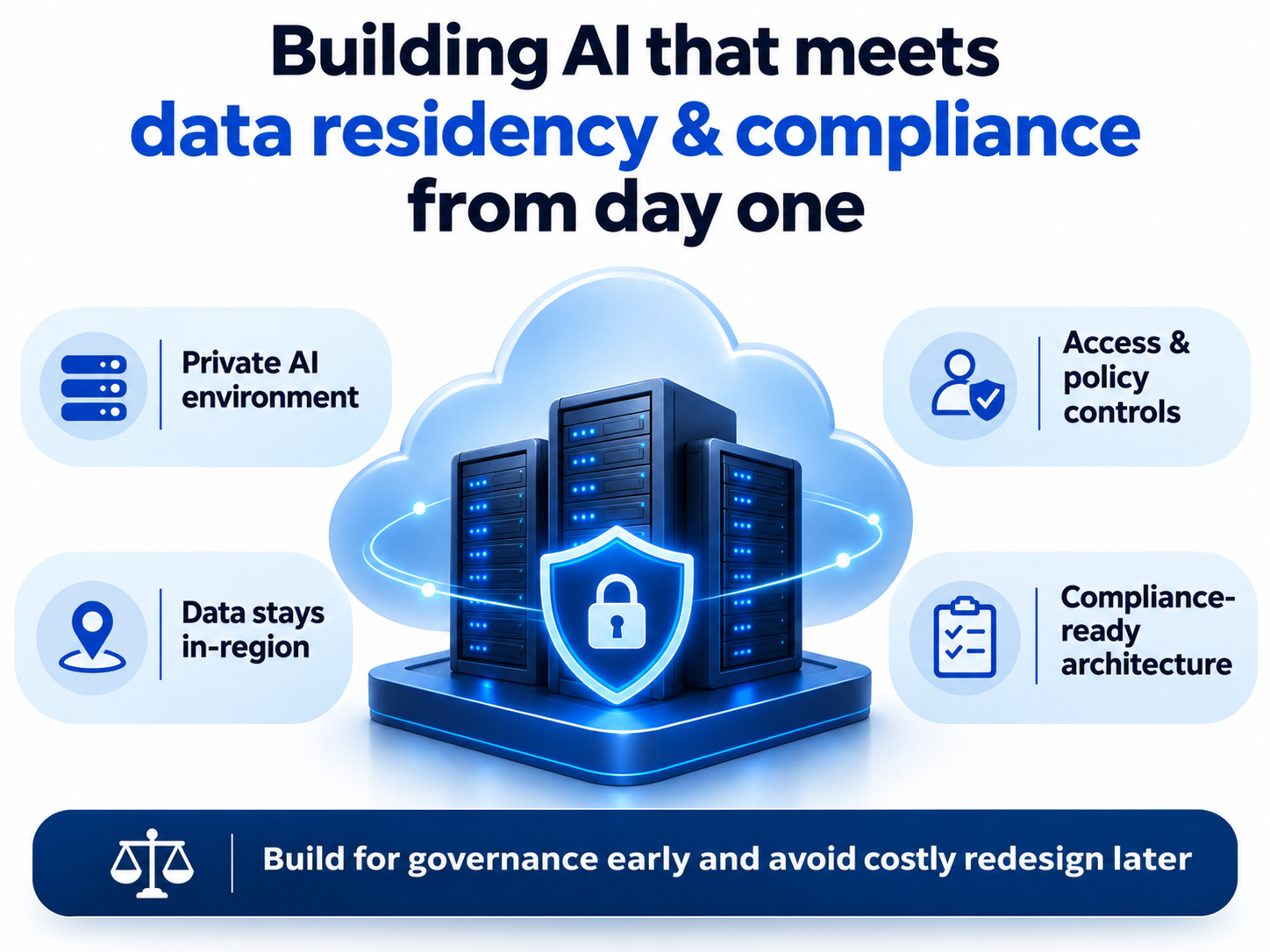
Building AI that meets data residency & compliance from day one
For regulated organisations, AI compliance should be considered as part of the infrastructure strategy, not as an afterthought. Clear controls around data, access, processing and governance can make compliance easier to manage as AI adoption grows. Addressing these requirements early can also reduce the complexity of making changes later.
- Regulated AI needs clear answers on four areas: where data is processed, who can access it, how the environment is isolated and what evidence supports the controls.
- Compliance is harder to retrofit. Changes may involve migrating data, rehosting models and reviewing where AI workloads are processed.
- A private and controlled AI environment can simplify compliance management by giving organisations greater visibility over configuration, access and security controls.
Finance, healthcare, legal and public sector organisations already have strict requirements around how sensitive data is stored, processed and accessed. AI does not change those responsibilities. In fact, AI can make them more important because models may process large volumes of sensitive information. Addressing security, governance and compliance from the start gives organisations greater control and a clearer position when requirements need to be demonstrated.
| Design it in from day one | Retrofit later | |
|---|---|---|
| Data migration | None — starts in the right place | Move live data mid-flight |
| Model re-hosting | Not required | Re-deploy and re-validate |
| Processing location | Fixed from day one | Renegotiated with the provider |
| Isolation | By design | By exception, if available |
| Audit readiness | Show your configuration | Chase provider disclosures |
| Business disruption | Minimal | Runs through a live system |
Four Questions Regulated AI Must Answer
A compliant AI environment should be able to clearly demonstrate:
- Data location: Where is data stored, processed and transferred?
- Access control: Who can access the AI environment and the data within it?
- Isolation: How are sensitive workloads separated and protected from other environments?
- Evidence: What documentation, configurations and security controls can demonstrate that requirements are being met?
Public AI platforms offer scale and convenience, while regulated workloads require greater control over data, security and governance. The right choice depends on your organisation’s needs.
Why Compliance Is Easier to Build In
It is generally easier to address compliance requirements before an AI environment is deployed than to make major changes later. Retrofitting can involve data migration, model rehosting and changes to processing locations. A private, controlled environment can provide:
- A defined hosting location from the beginning, with infrastructure operated from Singapore where appropriate for regional requirements.
- Greater control over data and workloads through appropriate isolation and security measures.
- Clearer access management so organisations can define permissions and maintain evidence of how the environment is controlled.
The Role of a Managed AI Provider
Running a compliant AI environment requires more than the right model. It also requires ongoing infrastructure management, monitoring, security and support. A managed provider can handle these operational responsibilities while your organisation defines how its data, models and workloads are accessed and used. This allows your team to focus on deploying AI for business needs without having to manage every layer of the underlying infrastructure.
Choose AI Around Your Requirements
The right starting point for regulated AI is not the latest model or most impressive demo. It is understanding your requirements around data residency, security, access and governance. Once those requirements are clear, you can choose the infrastructure and AI tools that fit them. This approach reduces the need to redesign the environment later and gives the organisation a stronger foundation for compliance.
Frequently asked questions
Which industries most often need this?
Does using a compliant provider make us compliant?
What evidence do auditors typically ask for?
Can we run regulated and non-regulated workloads together?
How can a managed provider support AI compliance?
Ready to build private AI?
Speak with our specialists about the right sovereign AI environment for your data, models and workloads.
Schedule a Consultation