
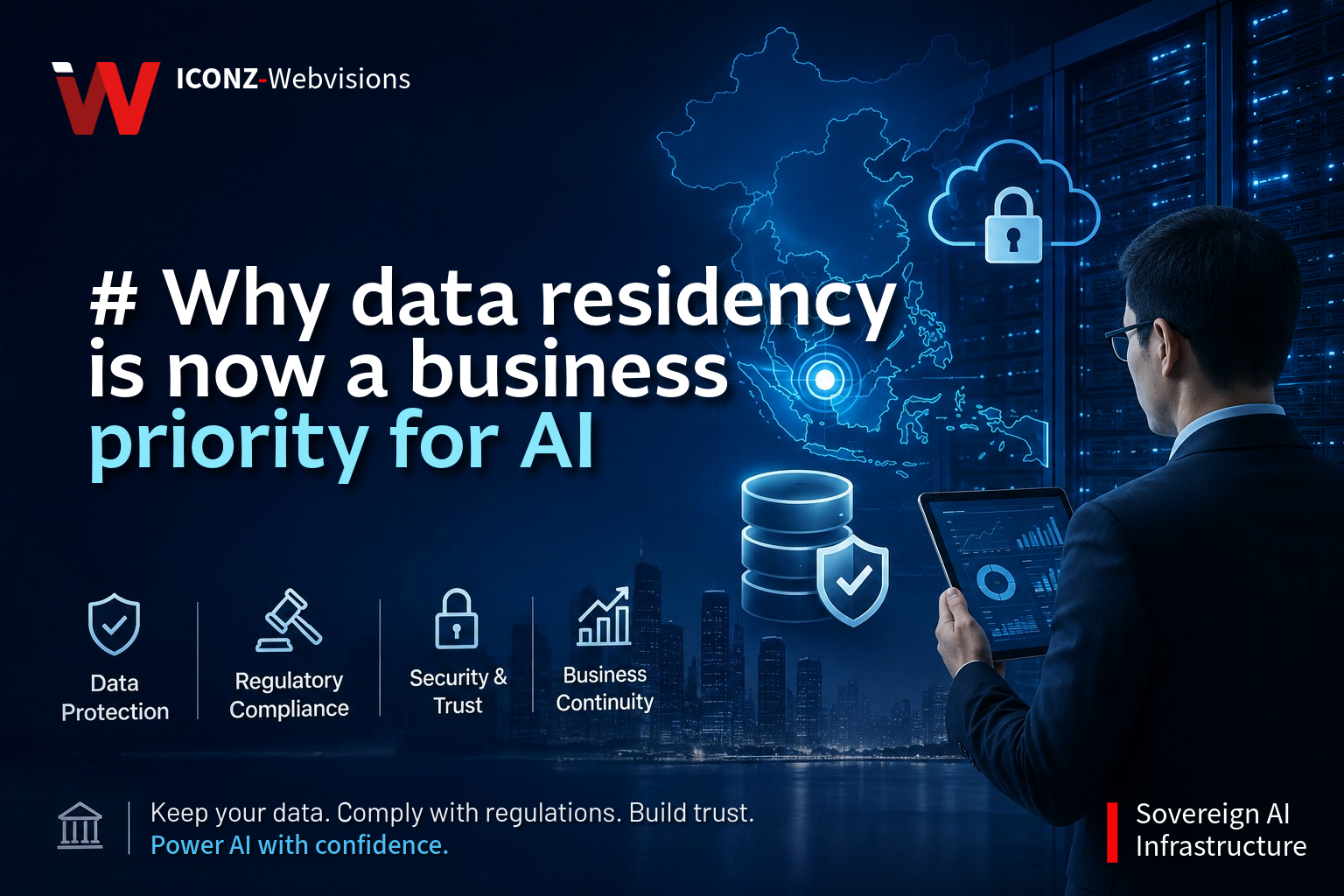
Why Data Residency Is Now a Business Priority for AI
AI infrastructure used to be a technical discussion. Today, it is part of the broader conversation around data governance, security and business risk. Where your AI data is stored, processed and managed can have a direct impact on compliance and operational control.
- Data residency goes beyond storage. It now includes where AI models are hosted, where data is processed and where inference takes place.
- Regulation, intellectual property and business accountability are making AI data residency a strategic priority for organisations.
- Plan for data residency from the start. Building it into your AI infrastructure early is typically simpler and more cost-effective than migrating a live AI environment later.
As organisations move from AI experimentation to deploying AI across core business operations, every prompt, document and dataset processed by an AI model can contain valuable business knowledge. That information may include confidential data, intellectual property and regulated information. This makes one question increasingly important for business leaders: Where does our data go when it is processed by AI, and who has access to it?
| Public cloud AI | Sovereign AI (iWV) | |
|---|---|---|
| Processing location | Provider decides the region | You define where your AI runs |
| Infrastructure | Shared with unknown tenants | Dedicated and isolated |
| Model parameters | Pooled on a shared platform | Private to your environment |
| Policy changes | Can change without your input | Governed by your requirements |
| Audit evidence | Depends on provider disclosure | You can show the configuration |
What 'Data Residency' actually Means
Data residency means keeping data stored and processed within a defined geographic or legal boundary. For AI, this goes beyond storage. It also covers where models run, where inference takes place, and where logs and temporary data are processed or stored.
Public AI services offer convenience and scale, but organisations may have less control over the underlying environment. Workloads can be processed on shared infrastructure, across different regions and subject to the provider's policies. For businesses handling sensitive or proprietary data, it is important to understand whether those controls meet their security, residency and compliance requirements.
When sensitive data leaves a controlled environment, visibility and control can quickly become harder to maintain. This is now a growing concern for business leaders.
Why Data Residency Is Now a Business Issue
Three factors have made data residency a strategic priority for organisations:
- Regulation is catching up with AI. Data protection laws across ASEAN and other markets increasingly place requirements on where regulated data can be stored and processed, including data handled by AI systems.
- AI is processing valuable intellectual property. nternal documents, customer information and proprietary business processes can become part of AI workflows. Exposing them through external platforms creates both privacy and IP risks.
- Accountability sits with the organisation. When a data breach or compliance issue occurs, regulators and customers ultimately hold the business responsible, regardless of which AI platform or service provider was involved.
Building AI Around Data Residency
Data residency should be considered as part of the AI infrastructure from the start. A residency first approach gives organisations control over four key areas:
- Data: Keep training data and business information within the environment.
- Models: Keep model parameters private and isolated from other organisations.
- Location: Run workloads in a known geographic location, such as infrastructure operated from Singapore.
- Access: Define who can access the AI environment and how systems connect to it.
This is the core idea behind sovereign AI infrastructure: a dedicated environment that keeps AI workloads private, isolated and located where you need them to be, without asking your team to build and operate the underlying stack.
What This Means for Your Business
Data residency should be part of the AI strategy from the beginning. Defining where data is processed, where models run and who has access gives organisations greater control and reduces the risk of having to redesign a live AI environment later.
Frequently asked questions
Is data residency the same as data sovereignty?
Does data residency apply to AI inference, or only storage?
Can we meet residency requirements on a public AI platform?
What does it cost to move to a residency-compliant setup later?
Where is iWV's infrastructure located?
Ready to build private AI?
Speak with our specialists about the right sovereign AI environment for your data, models and workloads.
Schedule a Consultation